

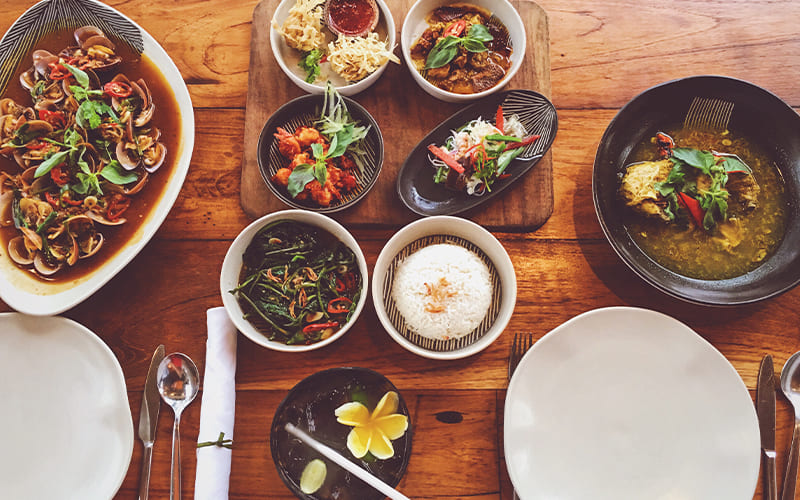
01 Ene Culinary History: Indonesian Gastronomy
Indonesian cuisine reflects its rich history and cultural diversity, shaped by centuries of trade, colonization, and interaction among various ethnic groups. Indonesia, a vast archipelago consisting of over 17,000 islands, has developed a cuisine that varies significantly from region to region but retains certain common ingredients and techniques across the country.

The foundation of Indonesian cuisine is rice, accompanied by a wide variety of sauces, spices, and seasonings that contribute to its intense and complex flavors.
 Since ancient times, Indonesia has been a major crossroads for traders from around the world, which has led to the introduction of ingredients and cooking methods from India, China, the Middle East, and Europe. This cultural exchange has resulted in a unique fusion within Indonesian cuisine.

For example, “rendang,” a slow-cooked meat stew in coconut milk and spices, originates from the Minangkabau people of West Sumatra but is now enjoyed throughout the country. The Indian influence is seen in the use of spices such as turmeric and cumin, while the Chinese presence is evident in dishes like “bakso,” meatballs served in broth.

During the colonial era, first under Portuguese and later Dutch rule, new ingredients and culinary techniques were introduced to Indonesia. Dutch colonists, for instance, brought wheat, which led to the creation of dishes such as “risoles,” a type of stuffed crepe, and “klappertaart,” a coconut cake.

Despite these influences, Indonesian cuisine has maintained its identity, standing out for its use of chili peppers, galangal, ginger, lemongrass, and other native spices that bring dishes like “nasi goreng” (fried rice) and “satay” (skewered meat) to life. Indonesian cuisine is not only a testament to its history but also a symbol of its cultural richness and diversity.















Sorry, the comment form is closed at this time.