

29 Sep Larabanga Mosque
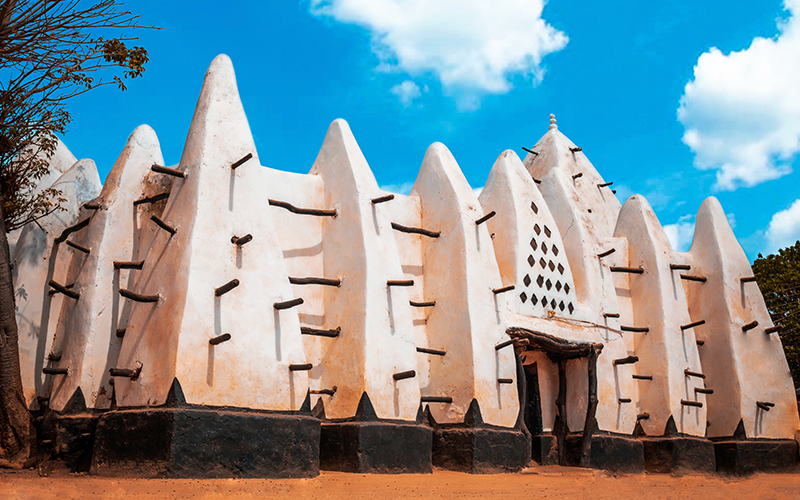
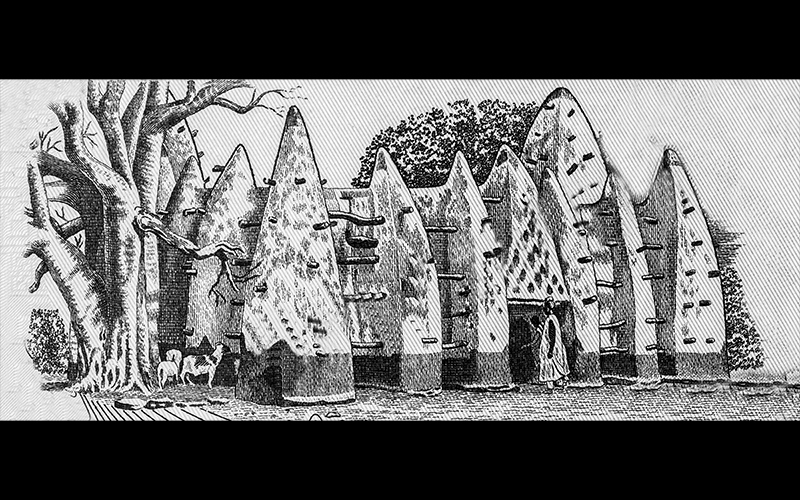
The Larabanga Mosque, often hailed as the ‘Mecca of West Africa,’ stands as a testament to Ghana’s rich history and architectural heritage. This mosque, believed to be the oldest in Ghana and West Africa, measures approximately 8m by 8m and has earned its place on the World Monuments Fund’s List of 100 Most Endangered Sites.
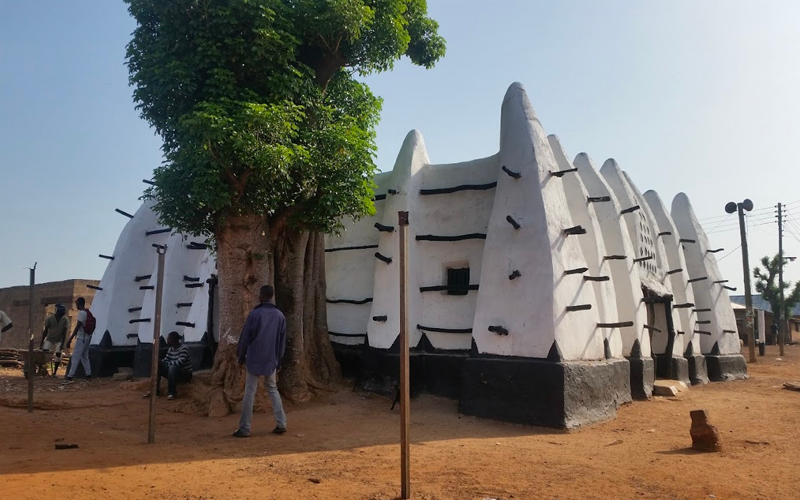
The exact construction date and builder of the mosque remain subjects of debate. However, it is widely believed that an Islamic trader named Ayuba, passing through the region in 1421, played a crucial role. Legend has it that Ayuba, inspired by a dream, witnessed the miraculous appearance of the mosque’s foundation the next morning. Undeterred, he continued construction, crafting the mosque from mud and sticks in the Sudanese architectural style. Adjacent to the entrance stands a majestic baobab tree, beneath which Ayuba rests in eternal repose.
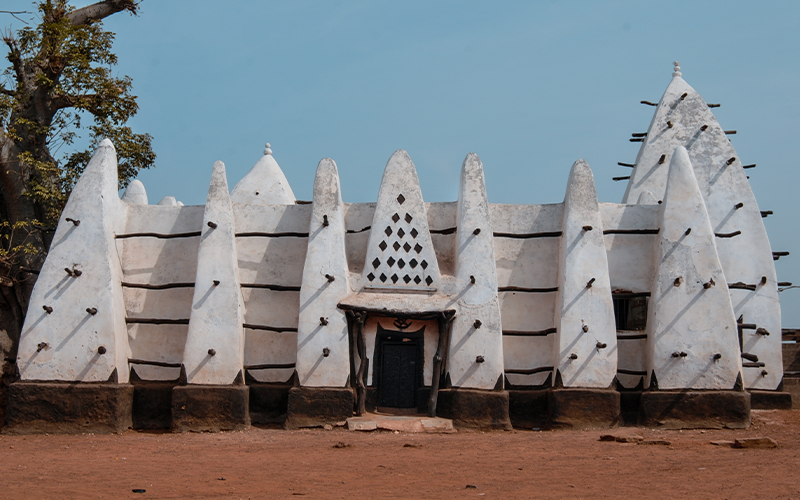
The mosque features four entrances, each designated for a specific purpose: one for the village chief, one for men, one for women, and one for the muezzin, responsible for the call to prayer. Notably, it houses an ancient Quran, believed to have descended from heaven to Imam Bramah in 1650 after fervent prayers.
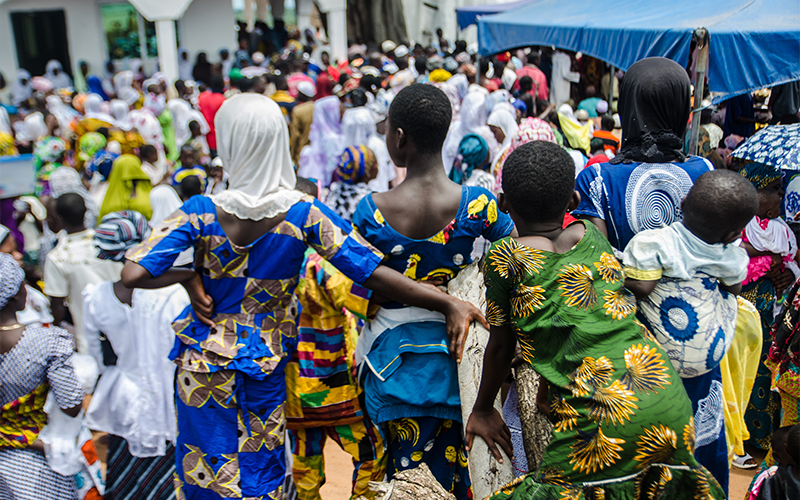
Situated in the predominantly Muslim town of Larabanga near Damongo in the Western Gonja District of the Northern Region, the mosque serves as a spiritual focal point for the community. Regrettably, non-Muslims are not permitted to enter this sacred space.
Apart from its role as a venue for Friday prayers, the Larabanga Mosque serves as a pilgrimage site for Muslim communities across the country. On significant occasions, devout worshippers gather for prayers and Koranic readings. Private readings are also organized, addressing the spiritual needs of individuals. In return, the Chief Imam typically requests offerings, including the sacrifice of a cow, for the community.
Historically, Islam entered Africa through Egypt in the 10th century AD, coinciding with the trans-Saharan slave and gold trade routes. These trade routes facilitated the spread of Islam in Ghana, with Mande warriors, Islamic traders, and missionaries playing pivotal roles. The Almoravids, a Berber Dynasty, further contributed to Islam’s dissemination, resulting in the construction of mosques in Northern Ghana, some of which endure to this day, dating back to the 17th century AD.
Architecturally, the Larabanga Mosque follows the Sudanic style, featuring rectangular dimensions, timber frame structures, and pyramidal towers such as the minaret and mihrab. Irregularly shaped buttresses with projecting pinnacles add a distinctive charm to the mosque’s elevations, reflecting the Sudanic-Sahelian architectural style prevalent in Northern Ghana. Built with local materials and construction techniques, the Larabanga Mosque stands not only as a place of worship but as an architectural gem, preserving the cultural and historical tapestry of the region.













Sorry, the comment form is closed at this time.